About Us
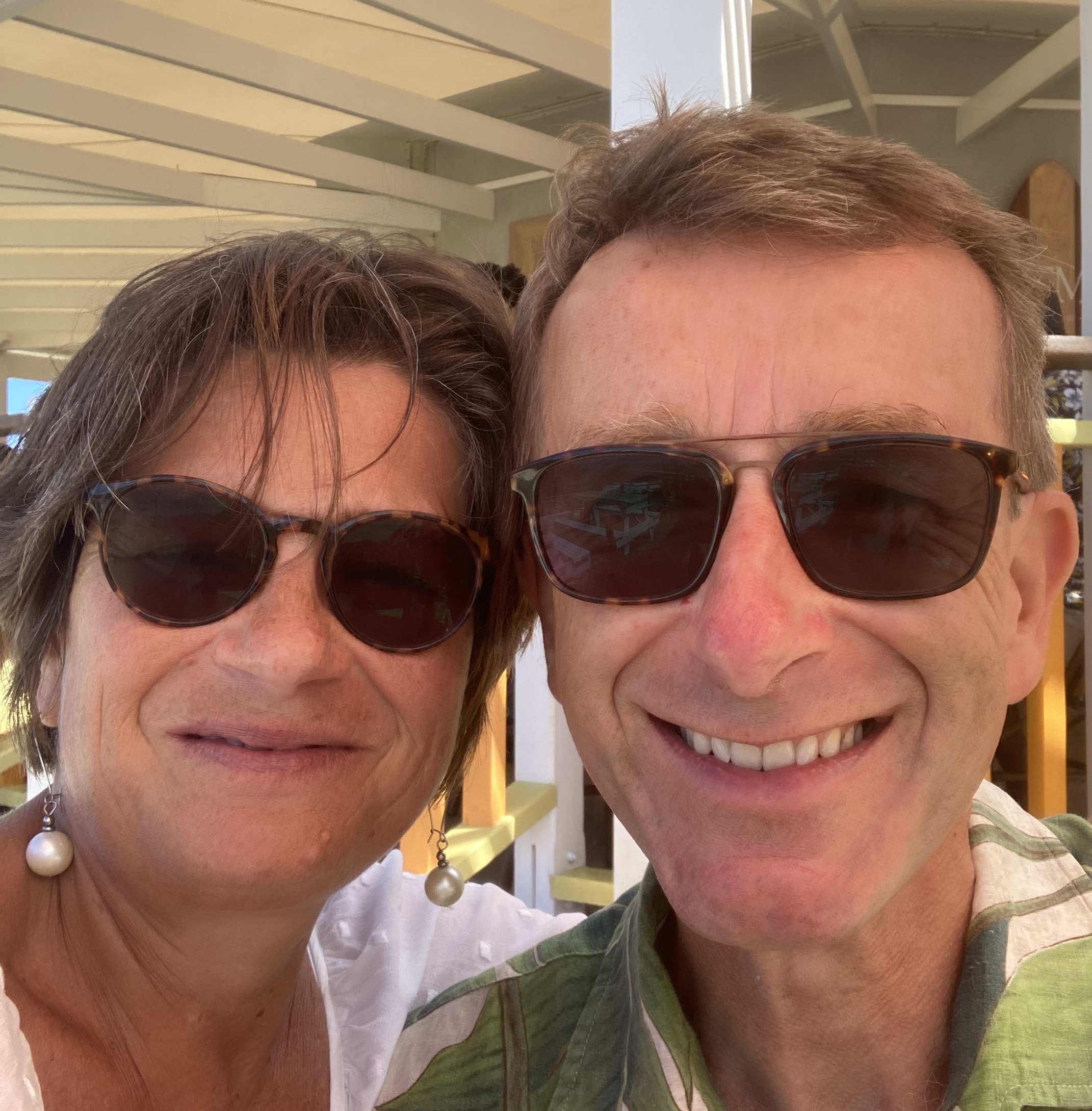
Nicola & Richard
Her
Bit of a mongrel. Born in Belize to a Jamaican father and a Trinidadian mother. A West Indian childhood moving about as the sugar industry moved my father. My parents moved to the UK in the early eighties. As my father's work evolved into more consultancy, he travelled far and wide advising countries on sugar manufacturing development. So you might well ask, what is the link to Barbados?
Contributing to the sugar (and by default rum) industry and an ecclesiastical multigenerational family, both my parents have ancestors who for several generations made Barbados their home. As children we would often come to Barbados to see my grandparents and great-grandparents from wherever we were .. Trinidad was the closest and an easy weekend visit.
After my parents retired they came to Barbados every winter to spend their heating allowance creatively and reconnect with an established social network to be jealous of. Many friends and family congregated in Barbados for its warm friendly people, developed infrastructure, beautiful beaches, cooling trade winds and wonderful rum. We looked forward to joining them most years, it was rude not to. Despite never living there, Barbados has been part of my life as long as I can remember.
Him
I'm London born and bred but from a proud Welsh family - Welsh was my first language, and I spoke no English till I went to nursery school. I had a strong chapel upbringing, still speak the language fluently and am 98% Welsh according to AncestryDNA - my friends in Wales would struggle to better that! So I guess I'm a mongrel too - London Welsh.
Since leaving school I've done a lot of independent travel around the world including two extended career breaks in my twenties and thirties, but the West Indies hadn't really featured until Nicola and I became an item. She is a kindred travelling spirit and we have loved discovering (or in her case rediscovering) this beautiful part of the world over the past quarter century.
On our first visit to Barbados together in 2002 | had a rush of blood to the head and proposed marriage on glorious Cattlewash beach under the stars - no plan, no ring, nothing! That was swiftly fixed when I was frogmarched into Diamonds International in Bridgetown the next day, and the island quickly found its way into my DNA too - it's special to us both. We are lucky to have a great support network here as a result of Nicola's long family history, and when we stumbled upon the amazing place that is Pollards Mill in 2024, we took a deep breath and decided to embark on this great adventure rather than die wondering. Come and experience it with us!
About Pollards Mill
The Legacy
We very much see ourselves as the temporary custodians, not the owners, of this historic property and never imagined we would ever be in this position, but in 2024 we stumbled on an opportunity of a lifetime and took a leap of faith. We feel very fortunate to be here.
The Pollard family’s connection with Barbados goes as far back as the early 17th century British settlement, and the Pollards plantation dates from at least 1712 - the date above the front door of the house. The name Pollard appears in this location on copies of two maps which we have, dating from 1728 and 1756.
We suspect that the oldest building here is the mill, and that the house itself originally served some agricultural purpose as it’s so close to the mill itself. It’s certainly not a grand ‘plantation house’. Remarkably, the bell is the plantation’s original.
The main house is constructed of natural local coral stone, which is what the island is made of - Barbados isn’t volcanic like the Leeward and Windward islands to the west. You can see many original lumps of coral in the walls, as well as later sawn coral blocks, plus whatever useful materials may have been at hand - we have spotted flat terracotta bricks, and Barbadian friends have found glass bottles embedded in their own old walls. The house’s front door was originally the rear, facing the carriage house and stable, which is now a three bedroom cottage. The more recently constructed one bedroom apartment is attached to the main house.
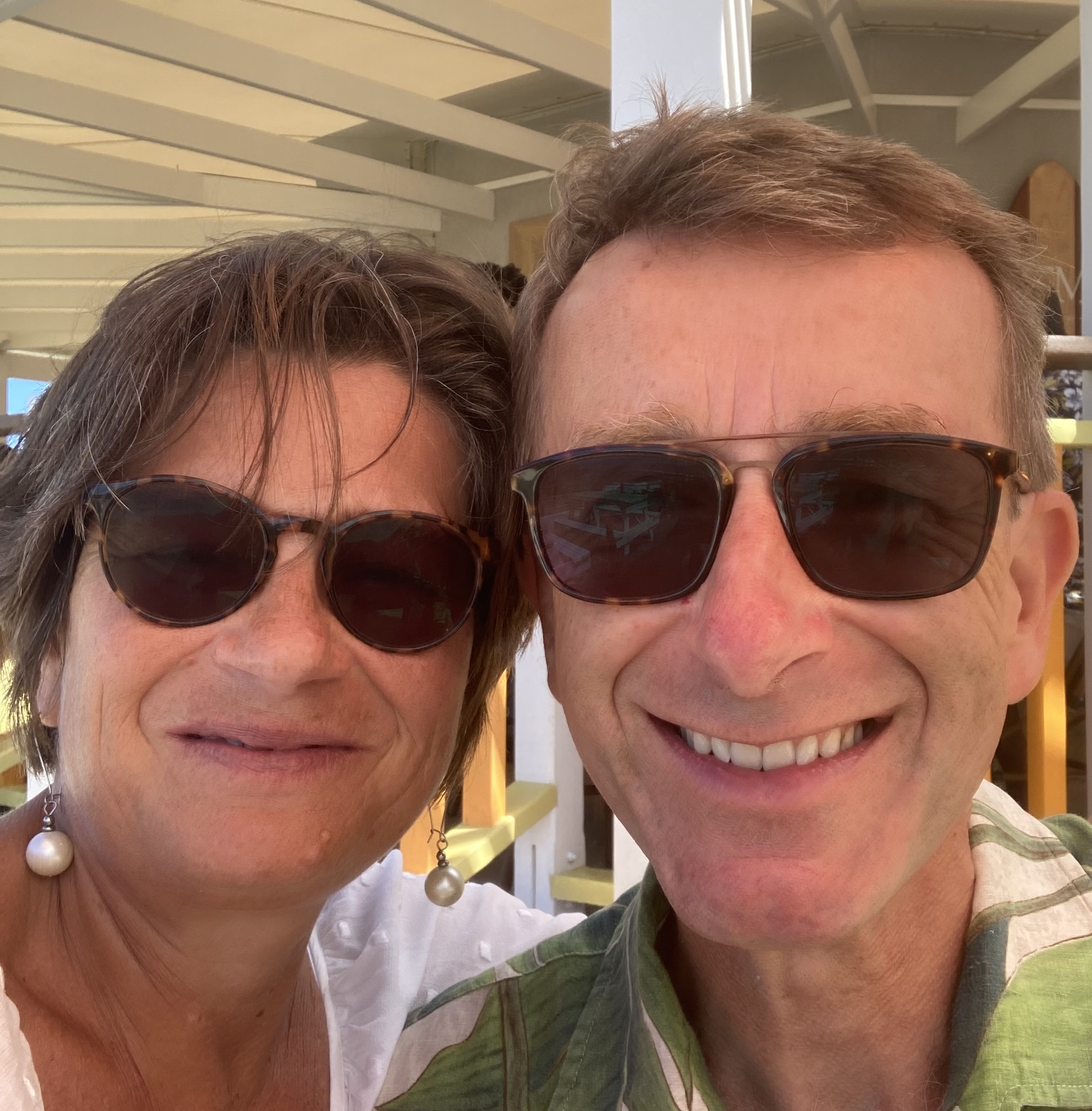
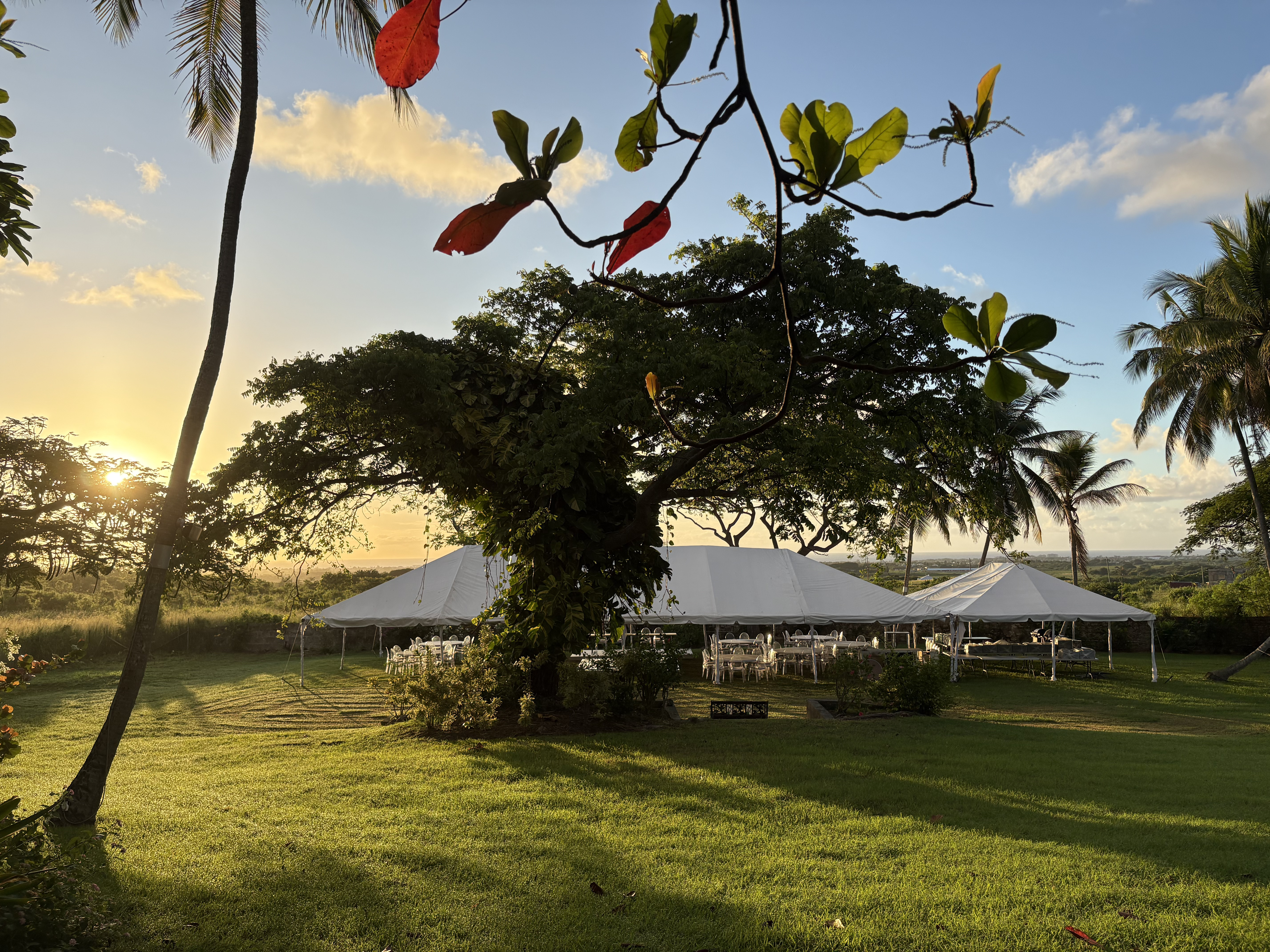
A Tropical Paradise
The Barbados National Trust has held at least two open days here - we have an Earthworks pottery plate commemorating one from 1998 - but the Trust knows very little about the history of the house and plantation. We hope to do some research in the Barbados Museum and find out more. We believe that the plantation lands originally amounted to 111 acres and that by 1913 the owner’s name was Bourne. The grounds of the house now extend to 2.5 acres.
More recently, in the 1950s and 1960s the house was a hotel called the Lu-Mar Inn, and later the Bonne Auberge restaurant. Several older local friends remember that, saying that a meal here was a trip into the country - nothing’s changed because Bajans still consider us to be ‘out in the boonies’ here, and call St Philip parish ‘St Far-lip’!
The property has been a private home under various owners since the 1970s. We are merely the current custodians, as we have said - but we feel a special connection with this wonderful place. Nicola’s family emigrated from England to Barbados in the 17th century, and her father and grandfather were both sugar engineers. Who would ever have thought that we would have an early 18th century sugar mill literally on our doorstep? We hope you will come and experience this very special place for yourselves.
"We believe every event should feel like an escape to paradise. Pollards Mill is designed to be that sanctuary."